



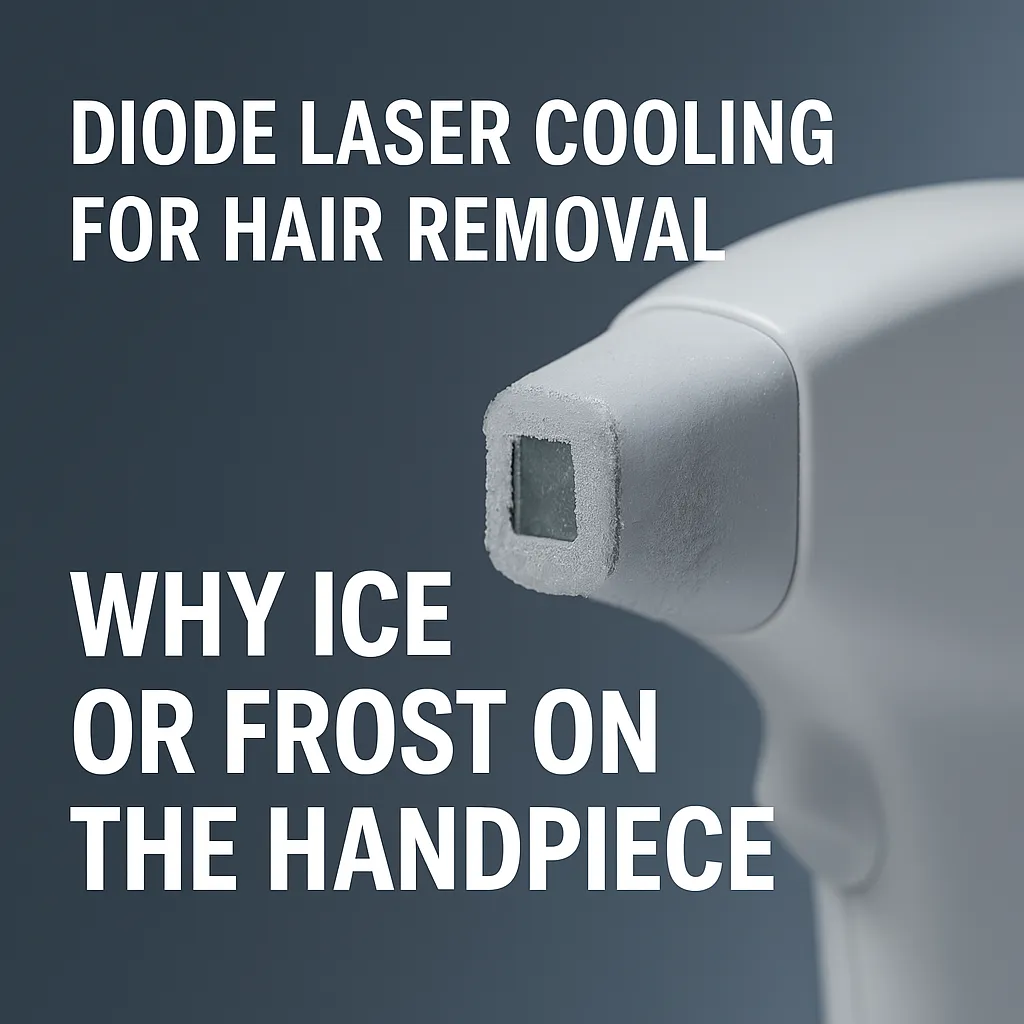
The cooling system of a diode laser protects the skin from a burn during the procedure. But stronger does not mean better. When ice or frost forms on the handpiece (the so-called “ice cap”), that is not an advantage, it is a sign of the system working wrong. Frost distorts the laser beam, condensation with a risk of a short circuit builds up inside the handpiece, and overcooled vessels coagulate worse, so the treatment weakens and the machine fails sooner. Below we break down how a diode laser cooling system works when it is right, and why an “ice cap” in an advert is a red flag.
Laser Technology has serviced diode lasers from many brands for over 8 years. We are not a manufacturer or a reseller: these very “icy” machines come to us for repair regularly, so we explain from practice, not from an advert.
Contents
- Why a diode laser needs cooling
- How contact cooling works
- Why ice or frost on the handpiece (“ice cap”) is bad
- What it threatens for the equipment and the client
- How overcooling affects the vessels and the result
- How a diode laser cooling system should work
- The bottom line and what to look for
Why a diode laser needs cooling
Laser light at 808-810 nm targets the melanin in the hair shaft and follicle. The melanin heats up, the hair papilla is coagulated by the high temperature, the hair stops being fed and falls out in about 10 days. During the pulse the client feels a hot prickling. To keep it from turning into a burn and to keep it comfortable, the handpiece cools the skin by contact at the moment of the pulse. So the job of cooling is to protect the epidermis, not to “freeze” the area.
How contact cooling works
Contact cooling is the removal of heat on touch with the skin. Inside the handpiece there is a transparent glass that the laser beam passes through and that touches the skin. Its temperature is lowered by thermoelectric elements (Peltier elements): the Peltier element cools the glass, and the glass cools the skin. The higher the thermal conductivity of the glass, the more precisely the cold is transferred.
| Handpiece glass | Light transmission | Thermal conductivity / cooling | Where it is used |
|---|---|---|---|
| Sapphire glass | Higher | Higher, cools the skin more effectively | Quality machines |
| Quartz glass | Lower | Lower | Budget machines |
Why ice or frost on the handpiece (“ice cap”) is bad
It seems logical: the stronger the cooling, the better, since the client feels no pain. In reality, frost appearing on the handpiece glass (the “ice cap”) is a sign of faulty cooling logic. Makers of such machines present it as the benefit of a powerful system, but the frost appears because of the excessive work of the elements inside the handpiece, which only cool the skin and do not remove heat from the emitter. That is not “powerful cooling”, it is incorrect cooling.
What it threatens for the equipment and the client
- Beam distortion. Frozen glass scatters the laser beam, and the treatment becomes less effective.
- Condensation and short circuit. Because of the temperature difference inside the handpiece, condensation forms, which can cause a short circuit in the emitter. This is a common reason for a repair.
- Overcooled vessels. Heavily cooled skin responds worse to heating, and the hair removal result drops (more on this below).
In most such machines the cooling is applied at once and is not synced with the pulse, so the ice cap appears within 1-3 minutes of switching on. That is the equipment working wrong, not an advantage of it.
How overcooling affects the vessels and the result
Before hair removal it is better not to overcool the vessels, which is also why doctors do not recommend a numbing cream. The reason: cold and a numbing cream constrict the vessels, while during the procedure they need to be heated instead, by the pulse, up to the coagulation temperature (roughly 70-100 °C). If the vessels are constricted by overcooling, you cannot predict whether the laser will heat them enough over a few passes, or underheat them and even stimulate hair growth. This is especially visible where the follicles sit shallow, for example on the upper lip.
How a diode laser cooling system should work
Correct cooling does two things at once: it protects the skin by contact at the moment of the pulse and removes heat from the diode stack so it does not overheat under a busy flow. It is dosed and does not turn the handpiece into a freezer. For salons with a high flow, a separate system (for example a chiller in stationary machines) handles heat removal from the stack, while the contact cooling of the skin stays moderate. If a machine “boasts” of an ice cap, that is a signal that the cooling engineering is done wrong.
The bottom line and what to look for
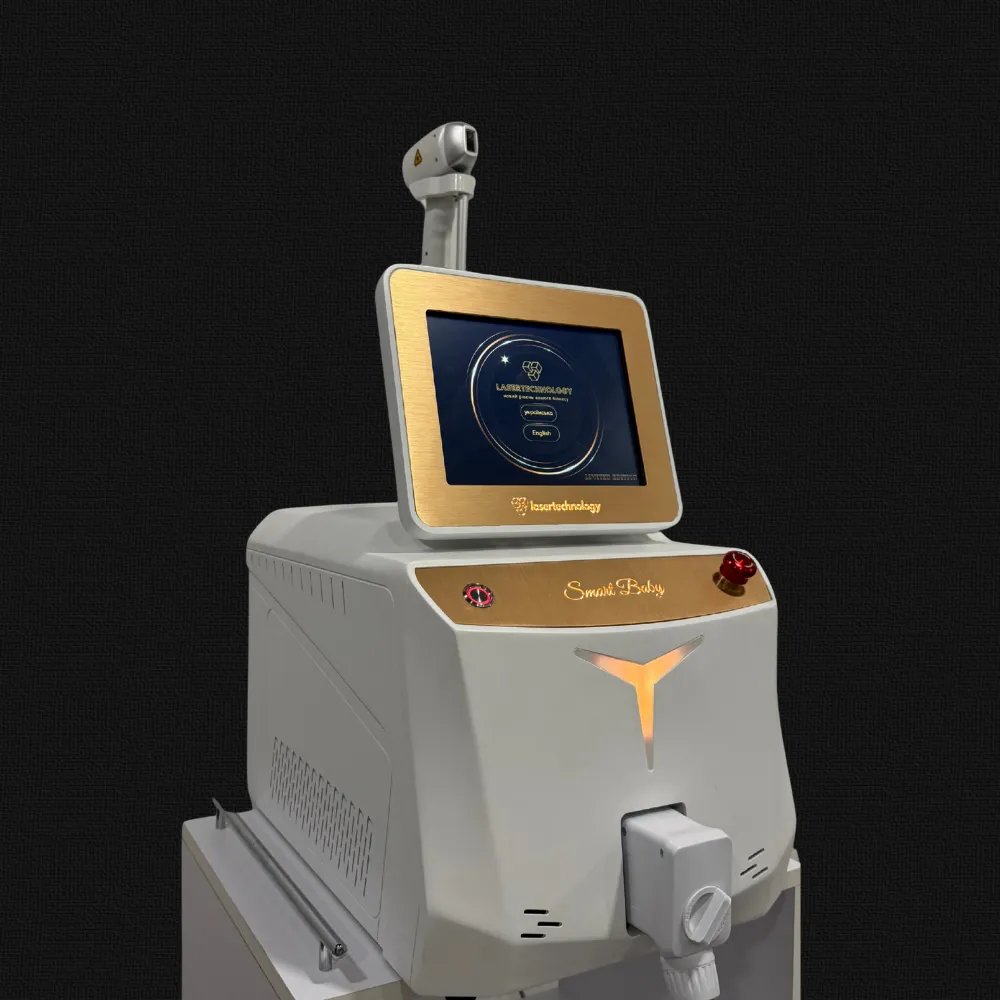
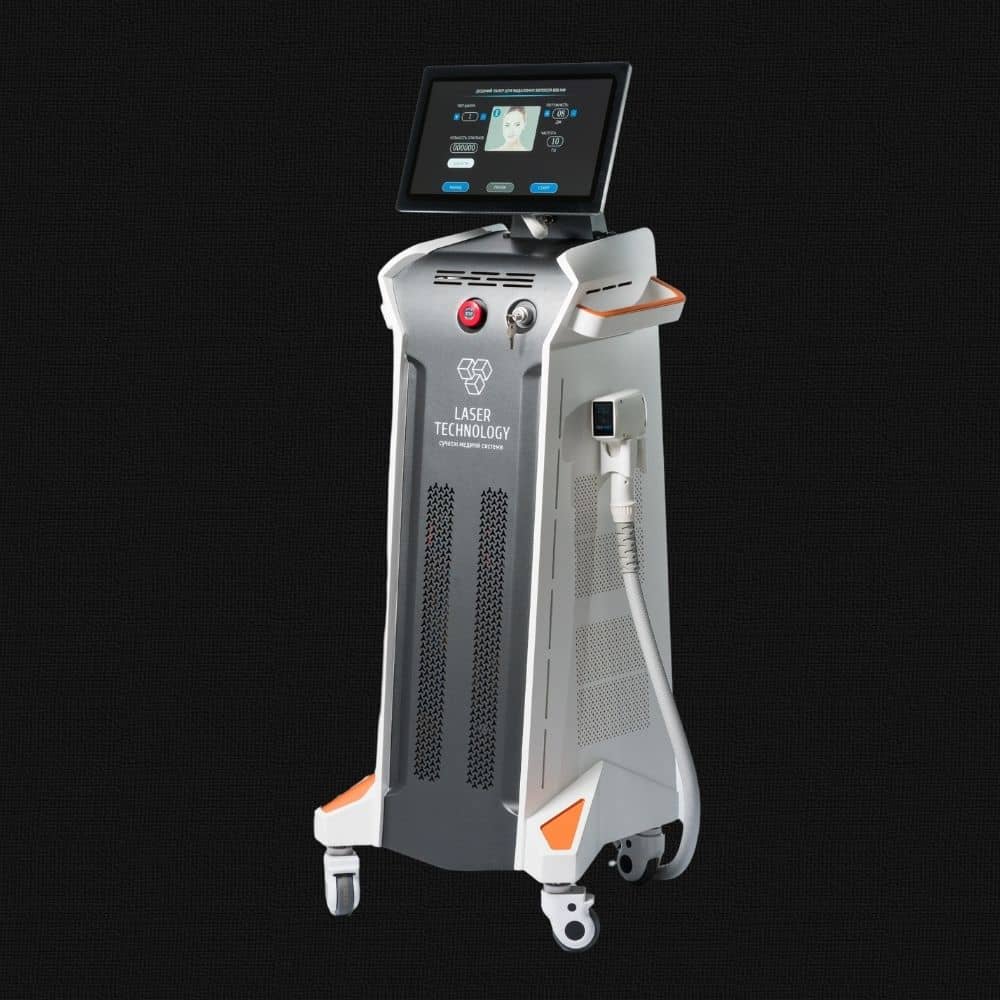
Ice or frost on the handpiece is not an advantage, it is a red flag: both the result and the machine’s lifespan suffer. When choosing, make sure the diode laser cooling system is dosed and removes heat from the stack, rather than only freezing the skin. How to assess cooling together with the other criteria (real power, service, warranty) is covered in Laser Hair Removal Machine for Salon: Diode, Alexandrite or IPL and Diode Laser Power: How Not to Fall for Inflated Watts. The working models in our line with correct cooling are the Smart Baby 1200 (portable, TEC) and the Hunter 2000 (stationary with a chiller for a continuous flow).
If your machine already frosts over or overheats, that can be repaired. Our engineers have seen hundreds of such handpieces, so write to us and we will look at your case. No pressure and no promises of easy money.
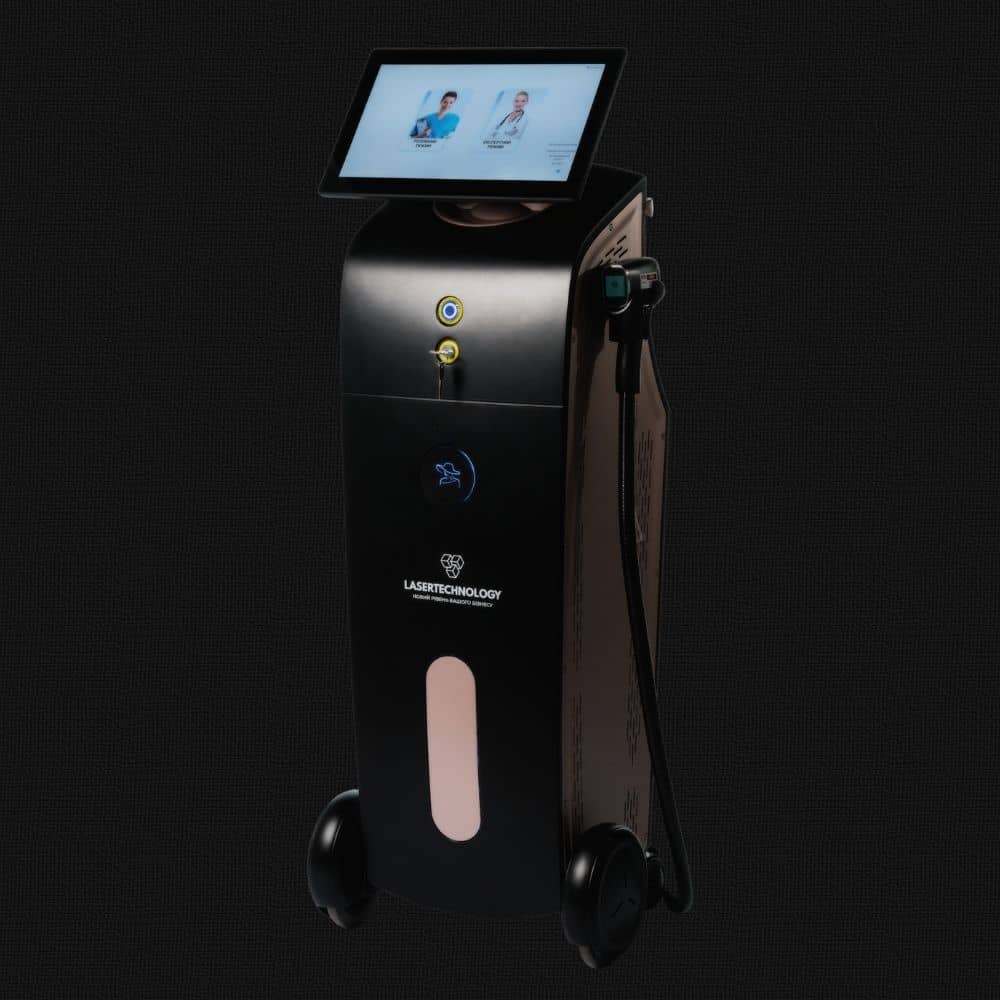
Recommended models with correct cooling
Machine overheating or frosting over?
It can be repaired. Our engineers fix overheating, ice caps and condensation in handpieces of any brand. Leave your number and an engineer will look at your case. The consultation is free.
Frequently asked questions
Why does frost form on a diode laser handpiece?
Is ice on the handpiece good or bad?
Which handpiece glass is better: sapphire or quartz?
Can a numbing cream be applied before hair removal?
How should a diode laser cooling system work?
Updated: 13 July 2026