



How do you pick the best laser hair removal device for your salon without pouring tens of thousands into a marketing wrap? You have decided to open a studio or add laser hair removal to your services. The first thing you see when you start looking is dozens of models, aggressive ads, numbers like 2000 W and 3000 W, promises of “payback in 2 months” and “100 million flashes”. It is hard to navigate, and a mistake costs tens of thousands.
Laser Technology has serviced diode lasers from many brands for over 8 years. Machines rated at 2000 W have come through our workshop where the power supply physically could not deliver that energy. We have seen cheap lasers that came back for repair 3 months after purchase. Out of that experience grew the 5 factors that actually matter when you choose your first device.
This article is not about selling you our machine. It is about what to look at when you choose your own first laser.
Contents
- The short answer for your client flow
- 1. Client flow determines the class of machine
- 2. Do not trust fake watts
- 3. Cooling decides half the result
- 4. What is inside matters more than the housing design
- 5. Service, warranty and training
- The bottom line
The short answer for your client flow
| Clients per day | Machine class | Power | Cooling | Models from our line | Guide price |
|---|---|---|---|---|---|
| Up to 3 (start, mobile, home studio) | Portable | 600-800 W | TEC | Hunter Mini 600W | from €9,200 |
| 5-10 (full cabinet) | Powerful portable or entry stationary | 1000-1200 W | TEC | Optimus 1000, Smart Baby 1200 | €13,700-16,600 |
| 15+ (busy studio, clinic) | Stationary for continuous work | 2000 W | Freon chiller | Hunter 2000, EOS Ice Pro Max 2000 | €21,200-23,000 |
1. Client flow determines the class of machine
The first question to ask yourself: how many clients per day do you plan?
- Up to 3 clients a day (beginner, home studio, mobile work). A portable machine at 600-800 W fits. Lower price, simpler cooling, less demanding to service. In our line the Hunter Mini 600W is made for this.
- 5-10 clients a day (full cabinet). Here you need 1000-1200 W, because the treatment has to be faster and the machine must not overheat between clients. Look at the Optimus 1000 or the Smart Baby 1200.
- 15+ clients a day (busy studio, clinic). You need a stationary 2000 W machine with chiller cooling that runs all day without overheating. That is the level of the Hunter 2000 or the EOS Ice Pro Max 2000.
Do not buy “with headroom for the future” if you have one client a week now. An expensive machine does not bring clients. Training, marketing and work on your studio bring clients. Start with a machine that covers your real flow, and move up to a more powerful one when the flow is there.
2. Do not trust fake watts
The power numbers in ads are most often marketing, not a real characteristic. A “2000 W” claim means nothing on its own. What matters is what is actually inside the machine.
Other people’s lasers come into our workshop regularly. The picture is typical: the sticker says 2000 W, and the power supply delivers 800 W. Why do it? Because the client compares machines by watts. Whoever prints the bigger number gets bought more readily.
What to ask the seller:
- Who makes the diode stack? (Focuslight, Coherent, Jenoptik is fine. A “no-name” stack is a reason to pause.)
- How many amps are fed to the stack? (The real measure of power, not a marketing figure.)
- Can you provide a datasheet with real specifications?
If the seller says “well, it works, we checked”, with no specifics, that is a bad sign. There is more on this in Diode Laser Power: How Not to Fall for Inflated Watts.
3. Cooling decides half the result
A diode laser is a machine that heats up, a lot. If the cooling is weak, the power drops during the procedure and the diode stack gradually burns out. Within a year the machine starts giving 50% of the rated power and clients complain about the result.
Three types of cooling you will meet on the market:
- Air (fan). Cheapest, weakest. Fits only machines up to 300-500 W and short procedures.
- TEC radiator (thermoelectric). The standard for portable and mid stationary machines. Holds the temperature well in work if you do not overload it.
- Freon chiller. Most expensive, most reliable. Lets the machine run all day without losing power. The standard for top models like the EOS Ice Pro Max 2000.
If you see an ad for “2000 W, air cooling”, that is a red flag. That combination physically cannot work in a stable way. Just as important, the cooling must not overdo it: frost on the handpiece is its own problem, covered in Diode Laser Cooling System: Why Frost on the Handpiece Is Bad.
4. What is inside matters more than the housing design
A pretty machine with a colour touchscreen can have cheap parts inside. And the other way round, a machine in a plain housing can be built on a serious stack. Looks do not correlate with quality.
What to look at:
- Diode stack maker. Focuslight (China, but professional grade), Coherent (USA), Jenoptik (Germany) are fine. An unnamed stack is not.
- Optics. LIMO FAC (Fast Axis Collimation) and crystal-free systems give higher energy density and lower losses. A sapphire prism is a classic that also works, but with more losses.
- Working spot (spot size). The standard is 1-2 cm². A larger spot means faster treatment of big areas (legs, back). A smaller one is needed for small areas (face, bikini). Some machines, like the EOS Ice Max 1200-600, have two handpieces in one housing for different areas.
- Display. A built-in skin and hair analyzer is useful: it picks the parameters for the client automatically and lowers the chance of a mistake, especially for a beginner.
5. Service, warranty and training
A laser is professional equipment that runs every day. After 6-12 months some part will start behaving wrong and will need a repair or replacement. The question is not “will it break”, but “what happens when it breaks”.
What to ask the seller:
- Who does the service? Own engineers, or is it sent to the manufacturer?
- Where is the service centre physically located?
- How long does a repair take on average?
- What is covered by the warranty and what is not?
- Are common spare parts kept in stock?
A case from our workshop. A client bought a cheap laser from another supplier. After 4 months the diode stack burned out. She went back to that supplier and heard: “We will send a part from China, wait 6 weeks.” The machine stood idle for those 6 weeks, clients went to other salons, income dropped. We service our own machines and competitors’, hundreds of models have passed through our hands, so we keep common parts on hand and know what breaks and why.
Training is part of the product. Many suppliers promise “training on purchase”. Listen carefully to what that training actually includes: often it is a 2-hour video or a certificate for attendance. Real training covers the machine’s technical parameters, working with different skin types on the Fitzpatrick scale, calculating parameters per client (energy, frequency, pulse width), what to do when the result is not obvious (red or grey hair, hormonal imbalance), safety rules and a burn protocol, contraindications, and managing client expectations. At Laser Technology, training is included in the price of the machine, because we do not consider the sale finished until you can actually work with the device.
The bottom line
Choosing your first laser is a balancing act. You need a machine that fits your real client flow, with proper cooling, a warranty nearby, and training. The cheapest option often turns out expensive. The most powerful one, without a client flow, sits idle. The 5 factors in one line:
- Client flow determines the class of machine
- Real power, not the marketing number
- Cooling that holds up in work
- What is inside matters more than the design
- Service, warranty and training that are actually there
If you want to work through how to choose the best laser hair removal device for your specific case, we offer a free consultation and test-drive. Tell us about your client flow, format and budget, and we will suggest a real model and answer your questions. No pressure and no promises of easy money.
Recommended models for a start
If you want a quick orientation across our line, here are three models for different scenarios:
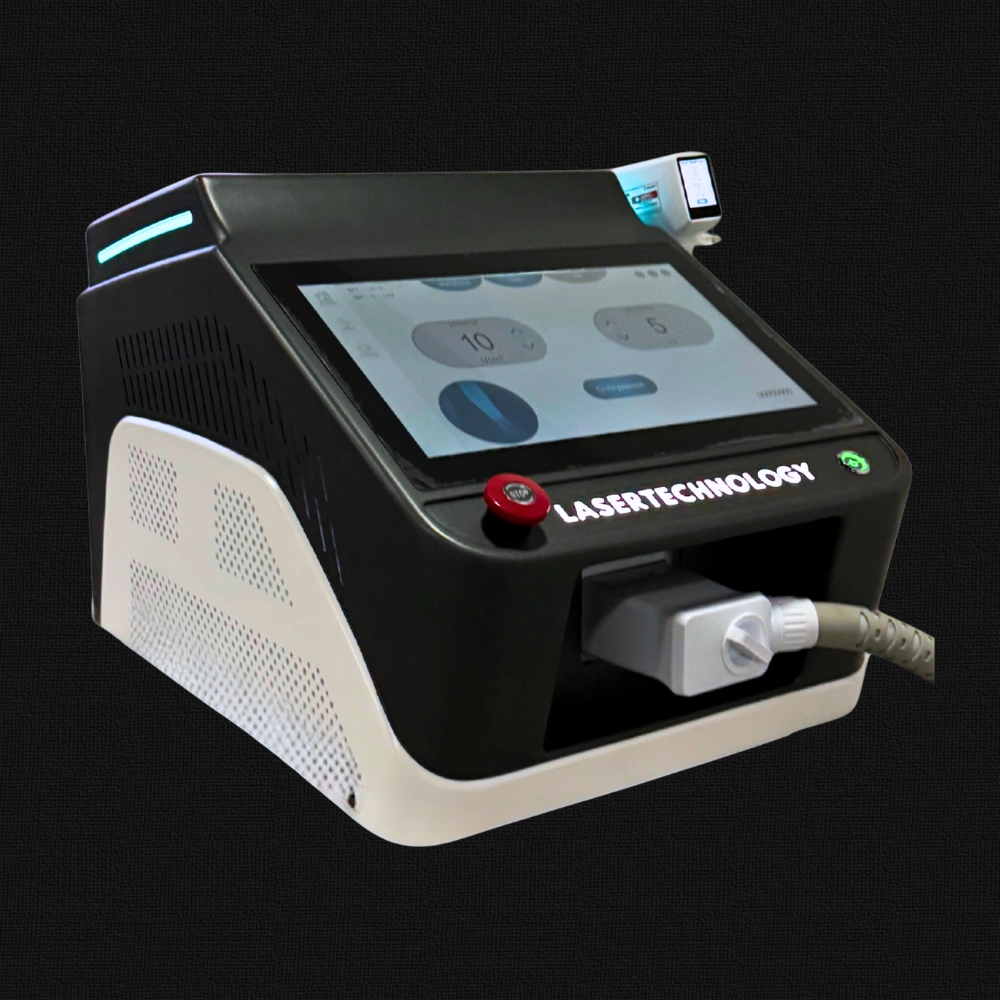
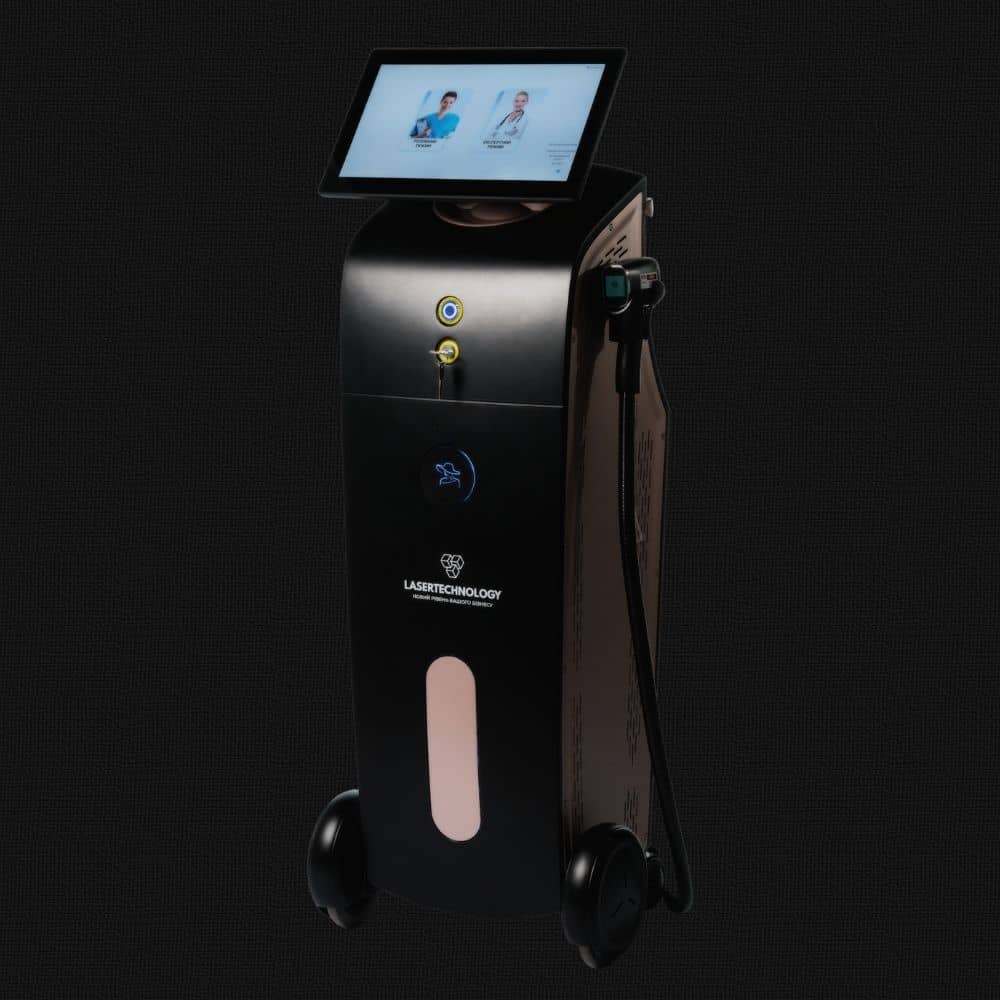
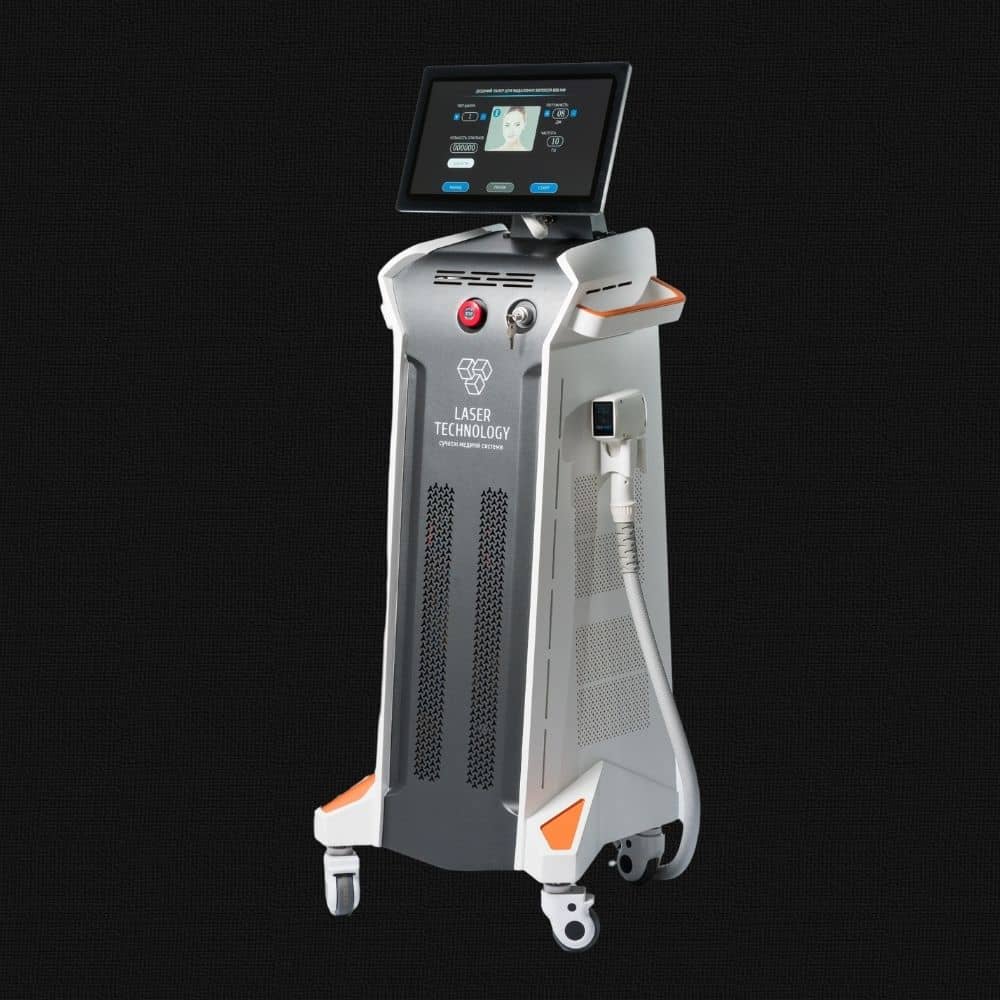
Or see the whole diode laser catalogue to compare all models.
Ready to choose your first laser?
Tell us about your client flow, format and budget. An engineer will call back and help pick the model for your task. The consultation is free.
Frequently asked questions
Which diode laser should a beginner start with?
Stationary or portable laser: which is better to choose?
How much does a diode laser for hair removal cost?
What if the laser breaks within the warranty period?
Can I work with the machine before buying?
Updated: 13 July 2026